
.svg)



Mastering Your Game Year-Round: A Guide to Training with a Golf Sim

4 minutes to read
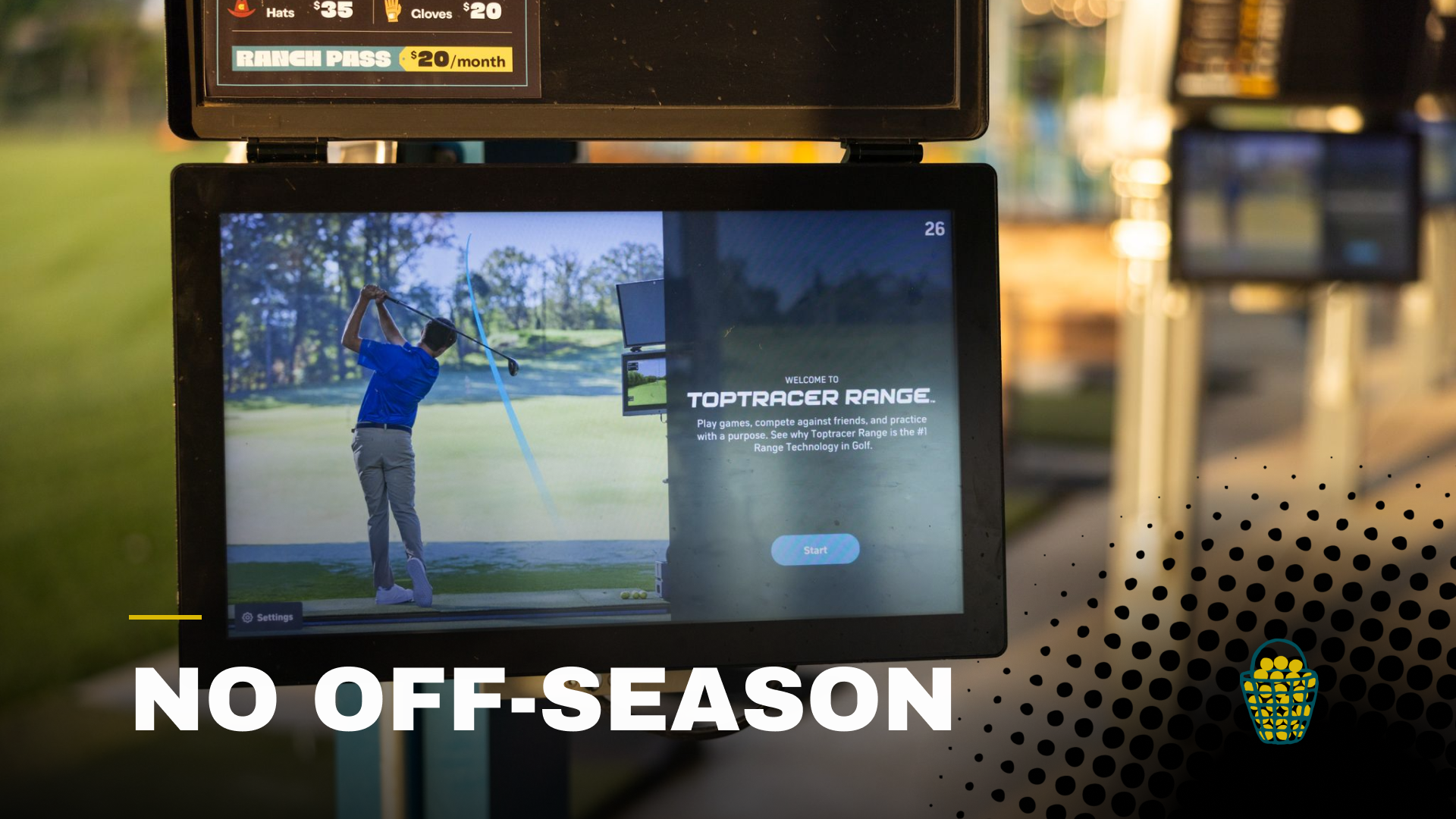
A golf sim keeps you indoors hitting into a screen. A Toptracer range gives you the same numbers on a ball you watch land, plus turf, chipping, and putting. 20 balls with a gapping plan and you'll know what changed.
After hitting 100 balls, do you know whether anything actually got better?
I've left range sessions with sore forearms and no idea. Forty balls in, a handful felt great, and I'd have told you it was a good one. Ask me what my 7-iron carried that day and I'd have made a number up on the spot.
A Toptracer range hands you the number. You hold this week's against last week's and find out whether the work took.
The problem with ball beating
Your eyes lie to you, and they lie in a predictable direction.
You watch one land near the 150 marker and file your 7-iron away as a 150 club. What you missed: it came off thin with a low apex, and the other nine flew 12 yards shorter.
Nobody's guess runs short. Ask a golfer for his 7-iron number and you'll get the best one he ever hit, never the one he hits nine times out of ten. In my experience that gap runs a full club, which is the difference between a birdie putt and a plugged lie in the front bunker.
So you go looking for numbers, and the internet hands you a golf sim.
Quick word on that term, because it gets thrown around loosely. A golf sim means indoor golf. You hit into a screen a few feet in front of you and software calculates where the ball would have finished. Different setup from a tracked outdoor bay, and a different job.
Indoors earns its keep in February in Connecticut. What it can't do is put a ball in the air in front of you. Three things a screen leaves out:
- Real ball flight. A sim reads the first few feet and does the math on the rest, so what you're studying is a computer's opinion of your shot. Outdoors you get the whole thing: the climb, the turn at the top, the low one that dies into a headwind and lands 20 yards short of where it looked like it was going. Your hands learn from that.
- Chipping and putting. A chip has to land, bounce, and run out somewhere. A putt needs a green under it. Several of our locations have a putting green on site, and Richardson has a chipping green as well. A good chunk of your strokes go there every round, and a screen has nowhere to put them.
- More than one surface. Every bucket comes with premium balls and a quality mat either way. Mats are forgiving though, and the golf course has never once handed anybody a perfect lie. The turf work you can only do outside is the work that shows up on a Saturday.
Real balls, real turf, a ball you watch land, and the numbers sitting over the top of all of it. That combination is the entire argument for practicing outside.
The weather-related plateau
The off-season is where handicaps quietly go backwards. Three months off, your setup drifts a degree at a time without telling you, and April turns into a rebuild of what you already had in October.
Weather is the one thing indoor golf genuinely solves, and a roof solves it just as well. Every bay we have has one, so a January session runs the same as a June session.
Practicing in the rain stops being a decision when the weather can't reach you in the first place.
Maximizing your toptracer range sessions
Look at what your eyes can't. Three groups of numbers do almost all the work, and reading launch data and dispersion in the right order is what tells you which flaw to fix first.
- Ball speed and smash factor: How centered the strike was, regardless of where the ball finished.
- Launch angle and apex: Whether you're compressing the ball or flipping your wrists through impact.
- Dispersion and carry distance: Your true carry, not carry plus roll, which is the only number you can plan a shot around.
The screen looks a little different at Glendale, which runs Trackman rather than Toptracer. Same three groups of numbers in a Toptracer bay or a Trackman one.
Precision over power
Everybody walks in wanting ball speed. Dispersion is the number that moves a handicap.
Toptracer draws the miss pattern you've been living with for years, which is the one thing you can't see standing behind the ball. Catch a path problem on the screen in April and you've caught a habit. Leave it alone all summer and you've grooved it.
The same principle turns up in other fields. It's what sits behind biofeedback therapy, where seeing the data in real time closes the gap between what you meant to do and what you actually did. If you'd rather have somebody read the screen with you, that's what our lessons and clinic sessions are for.
How to build a data-driven practice plan
Low handicaps come from a plan, not from a bigger bucket. Three steps, the same three every session. And if you want the shortcut, pga golf pro lessons at a range with tracking will get you there faster than working it out alone.
Step 1: Gapping your clubs
First 20 balls. Three shots with every club in the bag, average carry written down for each one.
Almost everybody turns up a pair carrying the same distance. A 5-hybrid and a 4-iron doing identical work means one of them has been along for the ride all season.
Step 2: Identifying your miss pattern
Watch where the shots cluster, not where the good ones went. Misses finishing short and right point at a face-to-path problem, and that one has a name and a fix.
Real-time visual feedback draws the curve for you, which matters because following ball curve against a gray sky is close to impossible.
Step 3: Simulating pressure with virtual rounds
Drills are comfortable. You get to hit the same shot until it works.
A virtual round makes you switch clubs every shot and then live with the last one, which is the part drills never test. And if you've brought family along, there's mini golf at some of our locations for whoever's finished hitting balls.
Your first 30 minutes
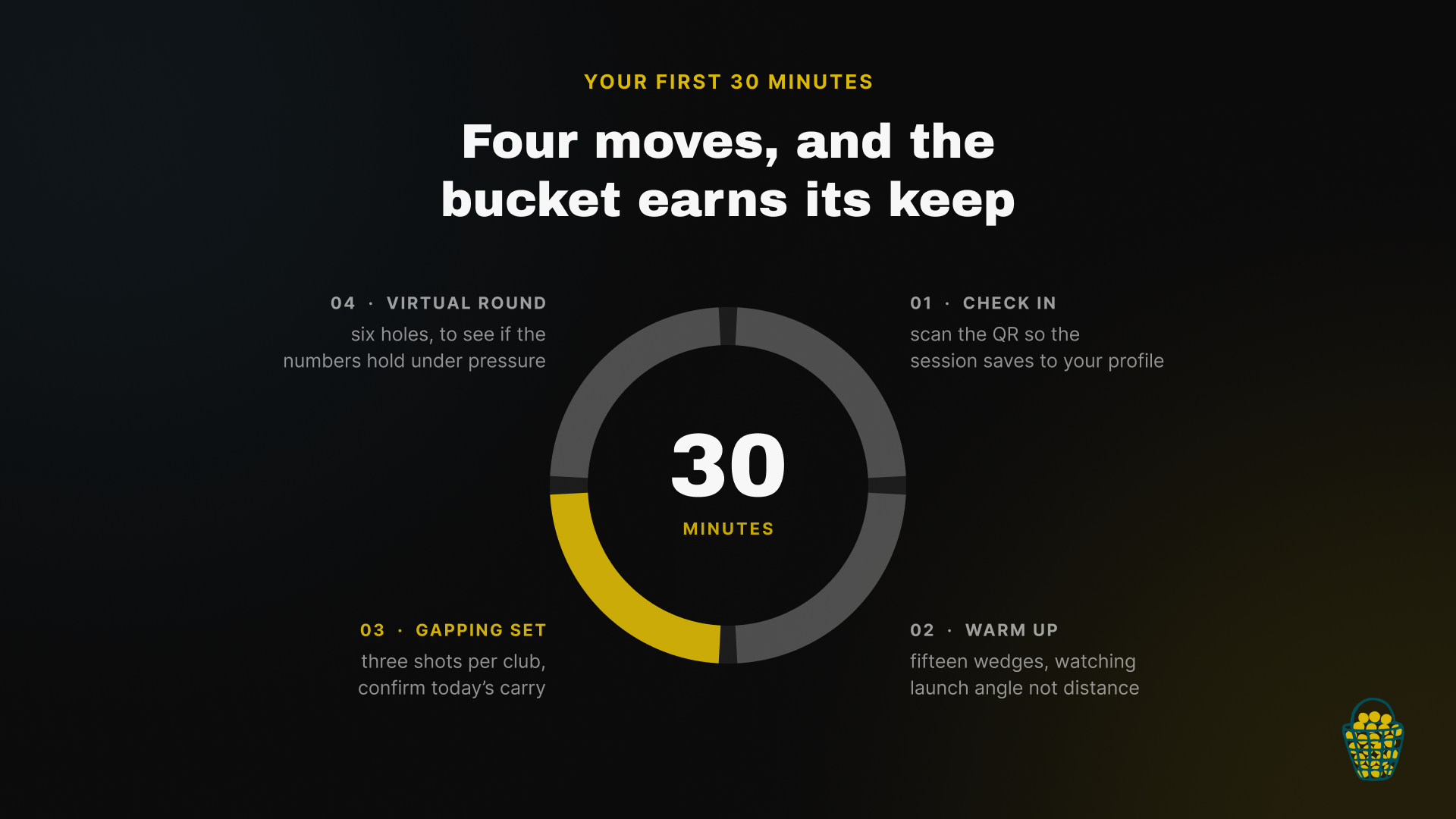
- Check into a bay and scan the QR code with the Toptracer Range app so the session saves to your profile.
- Fifteen wedges to warm up, watching launch angle for consistency rather than chasing distance.
- Run your gapping set and confirm today's carry numbers. They move with the temperature, so check them rather than assuming them.
- Finish with a six-hole virtual round and see whether those numbers hold up with something on the line.
Frequently asked questions
Does Toptracer data work for beginners?
Yes. Seeing your ball flight drawn on a screen is the fastest way to connect what you did with what the ball did, and at the start that connection is the entire lesson.
Is a golf sim the same as a Toptracer range?
No. A golf sim is indoor golf, where you hit into a screen and software predicts the rest of the flight. A tracked outdoor bay follows the ball you actually hit all the way to the ground, and you can work on chipping and putting while you're there.
Are the numbers as accurate as a pro launch monitor?
For ball data they're very close. Toptracer tracks the ball with cameras and it's reliable on speed, carry, and curve. A launch monitor in a fitting bay adds club delivery data on top, which answers a different question. For practice, the ball numbers are the ones you'll use.
Can I get golf pro lessons at the range?
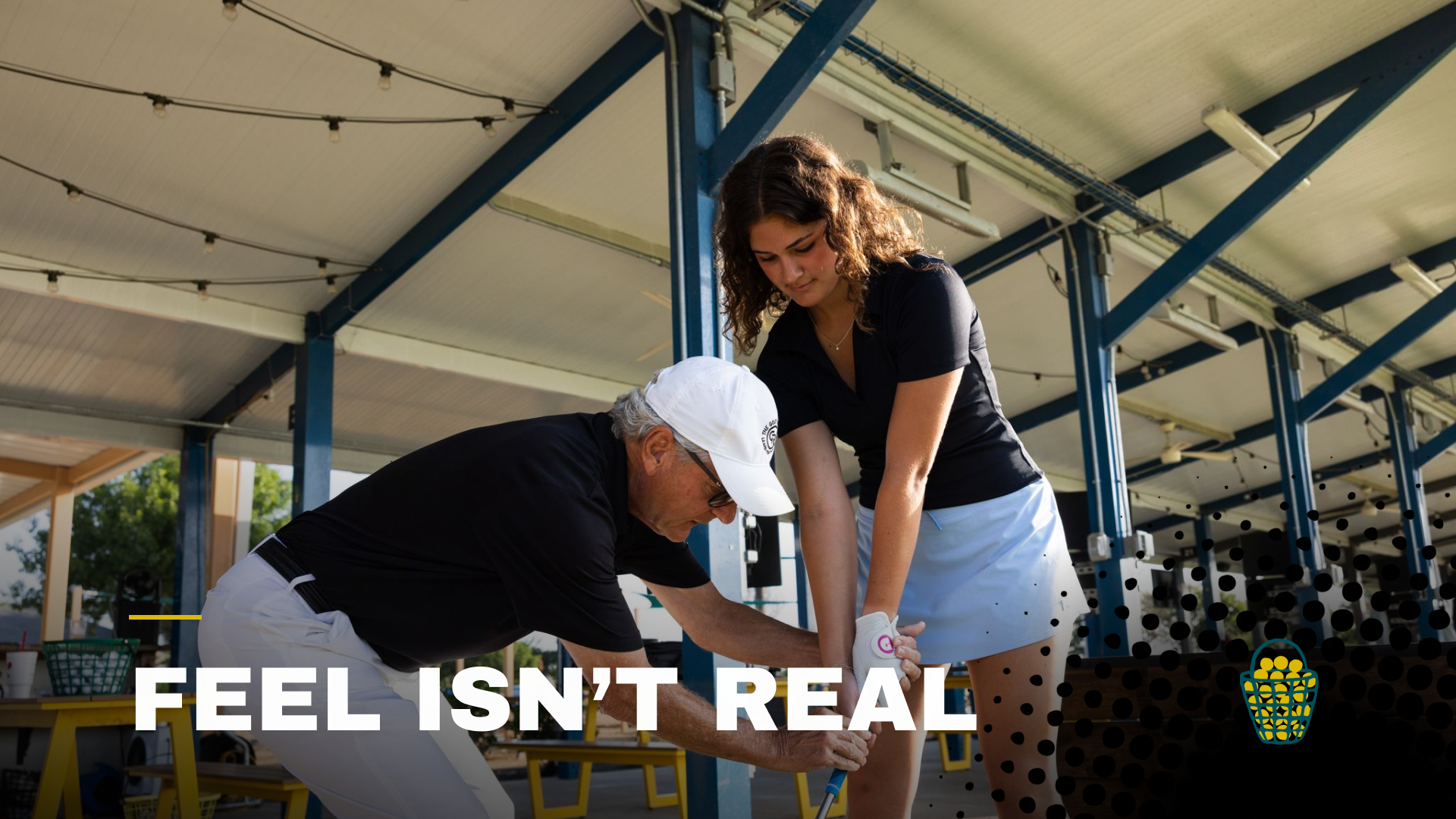
Yes. Golf lessons with a PGA pro alongside professional swing diagnostics on the same screen is the fastest combination there is.
What if it is raining outside?
Nothing changes. Every bay is covered, so covered hitting bays keep your schedule intact whatever the sky is doing.
Do I need my own clubs?
Your own are better for gapping, because the numbers only mean something if they're your numbers. You can rent a set from us to get started with the tech though.
The numbers only count if the ball actually flies
Off-season downtime is a choice. Go measure one flaw this week instead of arguing about it with your buddies.
If a golf sim is what you were searching for, this is the outdoor version: same numbers, on a ball that leaves the mat and lands somewhere real. Come grab a free bucket at your closest location and find out where your 7-iron really goes.

.png)