.svg)



The PGA Difference: How Certified Pros Diagnose Swing Flaws Faster

5 minutes to read
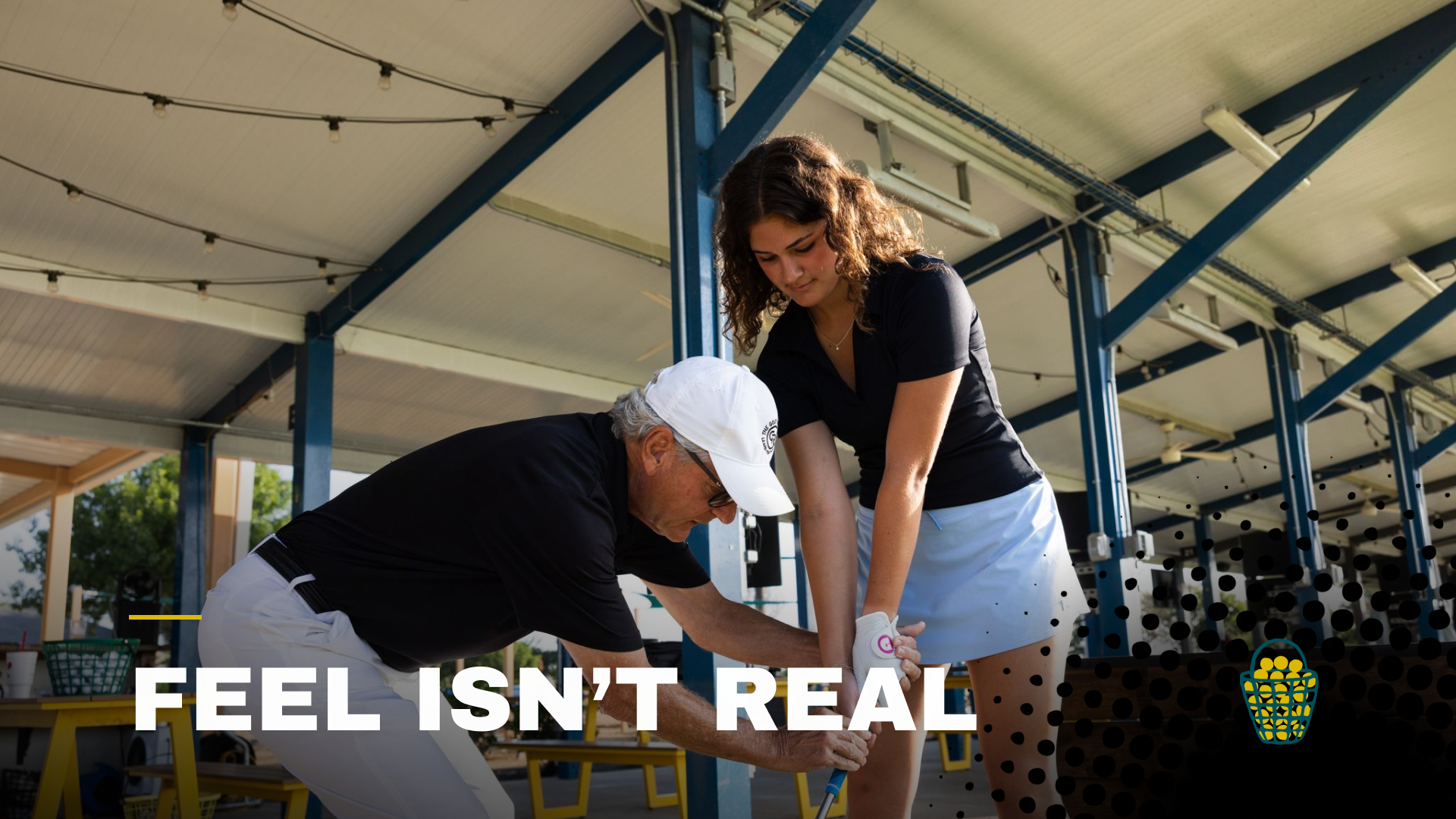
Hitting ball after ball can feel productive, but more swings do not automatically lead to a better scorecard. For the serious player looking to break into the single digits or stabilize a mid-handicap, a slice or pull that persists despite hours on the range is a sign that your diagnosis is off. Real improvement requires bridging the gap between what you think you are doing and what is actually happening. Investing in PGA pro golf lessons at Golf Ranch is the most efficient way to close this gap and see results on the course.
Why self-diagnosis fails most golfers
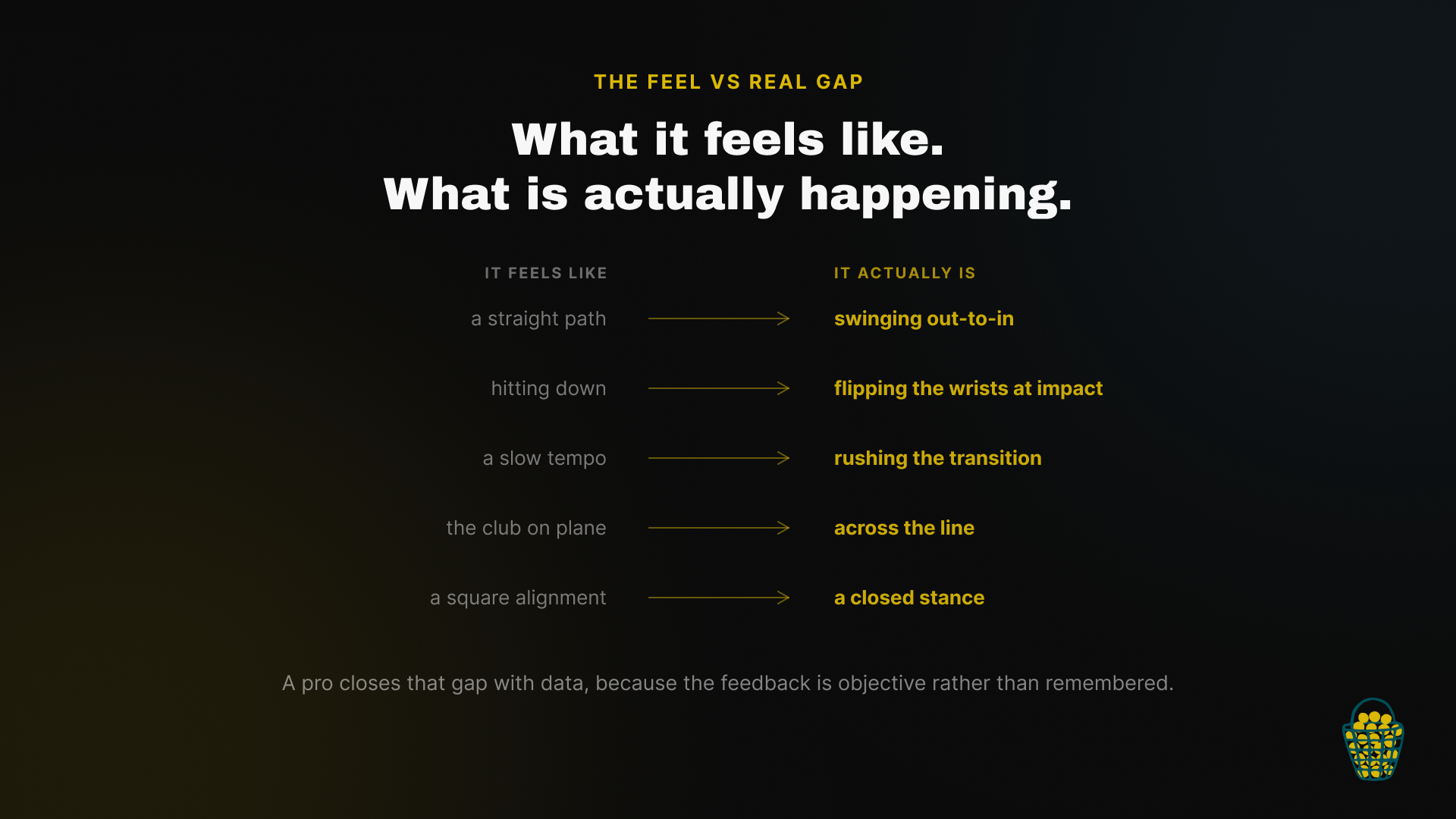
Watch golfers try to fix their own swings and the same hurdle shows up every time: the "feel vs. real" gap. Your brain interprets your body movements through a filtered lens of habit. What feels like a full shoulder turn might actually be a disconnected arm swing. Similarly, what feels like a square face might be ten degrees open. While some players attempt to use swing analyzer apps, these tools often lack the diagnostic depth of a professional eye to interpret why a movement is happening.
The trap of feel vs. real
- Feeling a "straight" path while actually swinging out-to-in
- Attempting to "hit down" but actually flipping the wrists at impact
- Sensing a "slow" tempo while rushing the transition
- Thinking the club is on plane when it is significantly across the line
- Mistaking a closed stance for a square alignment
Why YouTube tips can't always help
When you self-diagnose, you often treat symptoms rather than root causes. You might see a slice and try a fix from a video, like strengthening your grip. If your slice is caused by a steep transition rather than a weak grip, you are simply layering a new mistake on top of an old one. This leads to a frustrated game that feels like it is constantly falling apart. Much like how personalized performance management accelerates skill acquisition in business, professional golf instruction uses data to cut through inefficient trial-and-error cycles. Taking lessons in golf ensures you address these mechanics correctly from the start.
Comparison of self-diagnosis versus professional instruction
The PGA difference: data over guesswork
In my experience, the fastest way to improve is to replace guessing with objective metrics. PGA-certified instructors do not just rely on their eyes. They use technology to validate exactly what the club and ball are doing at the moment of truth.
How Toptracer validates the eye
A professional eye is trained to see subtle movements. However, interpreting golf data provides the hard evidence needed to convince a student's brain. When we show a golfer that their launch angle is too high or their ball speed is dropping due to off-center hits, the path to improvement becomes clear. At Golf Ranch Lee's Summit we use Toptracer data in every bay to create a baseline and track every inch of progress. Toptracer runs at five of our 6 locations, and Glendale runs Trackman.
Identifying root causes, not symptoms
By analyzing visual ball flight tracing, a PGA pro can distinguish between a swing flaw and a simple setup error. We look at the relationship between your path and face angle to find the one move that will unlock the rest of your swing. This precision allows us to cut through the noise. A single session can surface what might take months to find on your own, because the feedback is objective rather than remembered. A focused golf lessons swing analysis can pinpoint these issues instantly.
Pro tip: Focus on your dispersion pattern first. Most golfers focus on a single bad shot, but looking at your total shot cluster tells the real story of your swing's reliability.
Why professional lessons save you money
Professional instruction is an investment in your long-term success. A bucket of balls is cheap. However, spending years reinforcing bad habits is expensive in terms of both time and greens fees. By getting a professional diagnosis through structured golf lessons, you avoid the cycle of temporary fixes and build a foundation that lasts. At Golf Ranch you pay by the bucket, not by the hour, so you can practice with Toptracer at your own pace after your lesson. No membership is required, and unlike facilities built around complex golf membership programs, we keep the instruction accessible to everyone.
- Get a professional baseline using launch monitor data
- Focus on one specific root cause rather than five symptoms
- Use structured training sessions to reinforce the new movement
3 steps to your first data-driven lesson
- Book a session with a PGA professional to establish your baseline.
- Review your numbers to identify your most frequent miss.
- Incorporate gamified range drills to make your practice measurable and engaging.
Frequently asked questions
Do I need a high swing speed for data to be useful?
No. Data is just as important for low-speed players to optimize launch and carry distance.
Is Trackman better than Toptracer?
Both provide excellent data, and we run both. Glendale uses Trackman and our other five locations use Toptracer. Trackman leans toward deep technical analysis, while Toptracer is excellent for visual tracking and gamified practice during your everyday bucket sessions.
How often should I see a pro?
I recommend a check-in every 4 to 6 weeks to ensure your practice remains focused on the right goals.
Guessing at your swing flaws leads to ingrained bad habits. By combining PGA expertise with precision data, you stop practicing for the sake of it and start practicing for results. Ready to improve your game? Grab a free bucket and take your first swing toward a better game today.