.svg)



Reading Launch Monitor Data: Which Numbers Actually Matter?
3 minutes to read
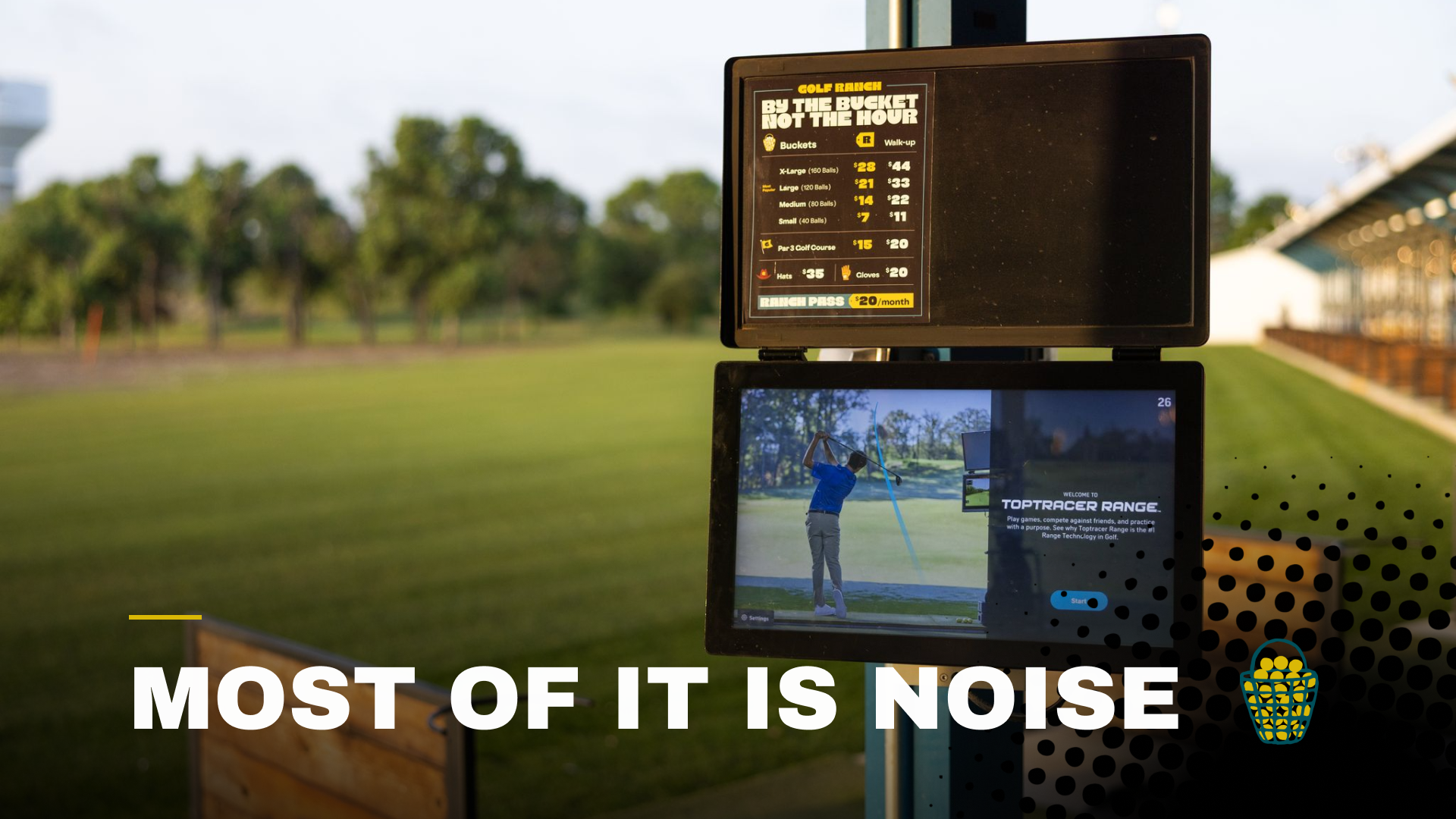
A well-struck 7-iron can light up the screen with a dozen different numbers, but most of them are noise.
For casual players, total distance is usually the number that gets all the attention. If you’re looking to lower your handicap, three metrics provide most of the useful insight. Toptracer gives you all three, turning each bucket from simple repetition into purposeful practice.
The three core metrics for faster improvement
These three tell you the most, the fastest. We put shot tracking in every bay for a reason: the number is the part of your swing you can't feel.
Old-school ranges guess. We measure. That's the whole difference, and it's why a session with numbers behind it moves a handicap in a way a hundred anonymous balls never will.
Ball speed: your power floor
Ball speed is the truest measure of impact efficiency. It's the energy you actually transferred to the ball, and it doesn't care how hard the swing felt.
That's what makes it more honest than swing speed. Swing speed measures effort. Ball speed measures contact.
Often, swing issues stem from the fundamentals, so ensuring you have a proper golf grip is the first step toward consistent impact. If the number still won't settle, that's a good reason to book a lesson with one of our coaches. Consistent ball speed means a consistent strike, and that's the read.
Launch angle: the window of success
Launch angle is how the ball leaves the face. Too low and you give away carry. Too high and the wind takes it back.
It's also the fastest tell on strike quality you'll get. A thin one and a fat one show up differently on the screen before they show up differently in your hands. Using a swing analyzer app or a launch angle guide gives you a second read on what the number is telling you.
Carry distance: the number that saves strokes
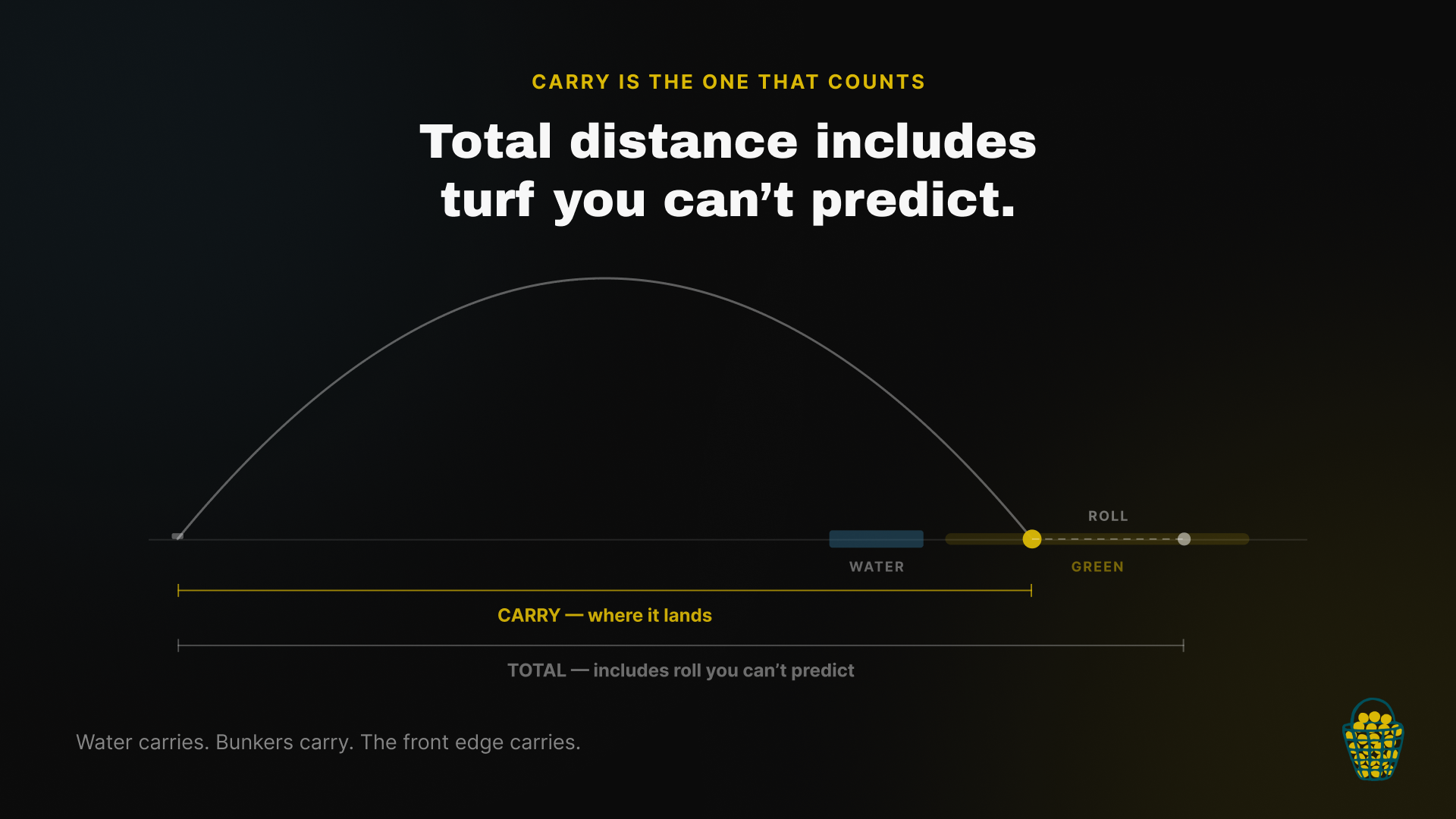
Carry is the number that shows up on the scorecard. Total distance includes roll, and roll depends on turf you can't predict from a bay.
Water carries. Bunkers carry. The front edge carries. Knowing your Toptracer data is what turns a club choice into a decision instead of a hope.
It's also the line between practicing and being entertained. A screen that scores your shot is fun. A screen that tells you exactly how far your 7-iron carries is useful.
Why real-time feedback changes your swing
Feel lies. Not always, but often enough that the swing that felt terrible and the swing that felt great can produce nearly the same number, and you'd never know without the screen.
That's the real value of instant feedback. You adjust on the next ball instead of at your next lesson. Set a target for ball speed or carry before you start and the session has a point to it.
Practicing in covered hitting bays keeps those numbers comparable session to session, whatever the weather is doing.
Your ideal launch window depends on the club in your hands and the speed you swing it, which is why a chart pulled off the internet is worth less than your own baseline. The screen gives you yours.
How to use this data at the range
- Establish your baseline: Hit 10 balls with your favorite club to find your average numbers.
- Identify your miss: Look for patterns in your launch angle or dispersion.
- Dial in your gapping: Check that the carry gaps between clubs are consistent, so you're not carrying two clubs that go the same distance.
One good number on one good swing means almost nothing. The same number ten sessions running means everything. That's the case for shot tracking, and it's the case for paying by the bucket instead of by the hour: no clock is running, so you can spend forty balls on one number until it moves.
If you want the outside view, Golf Ranch reviews are easy to find. There are 1,500+ five-star ones and counting.
Come grab a free bucket and see what your numbers actually say. Any of our 6 locations will do.