.svg)



Golf Ranch Reviews: Why Range Ball Quality Ruins Your Stats

3 minutes to read
You just flushed a 7-iron and the tracker says it came up short. Before you tear down your swing, look at what you just hit.
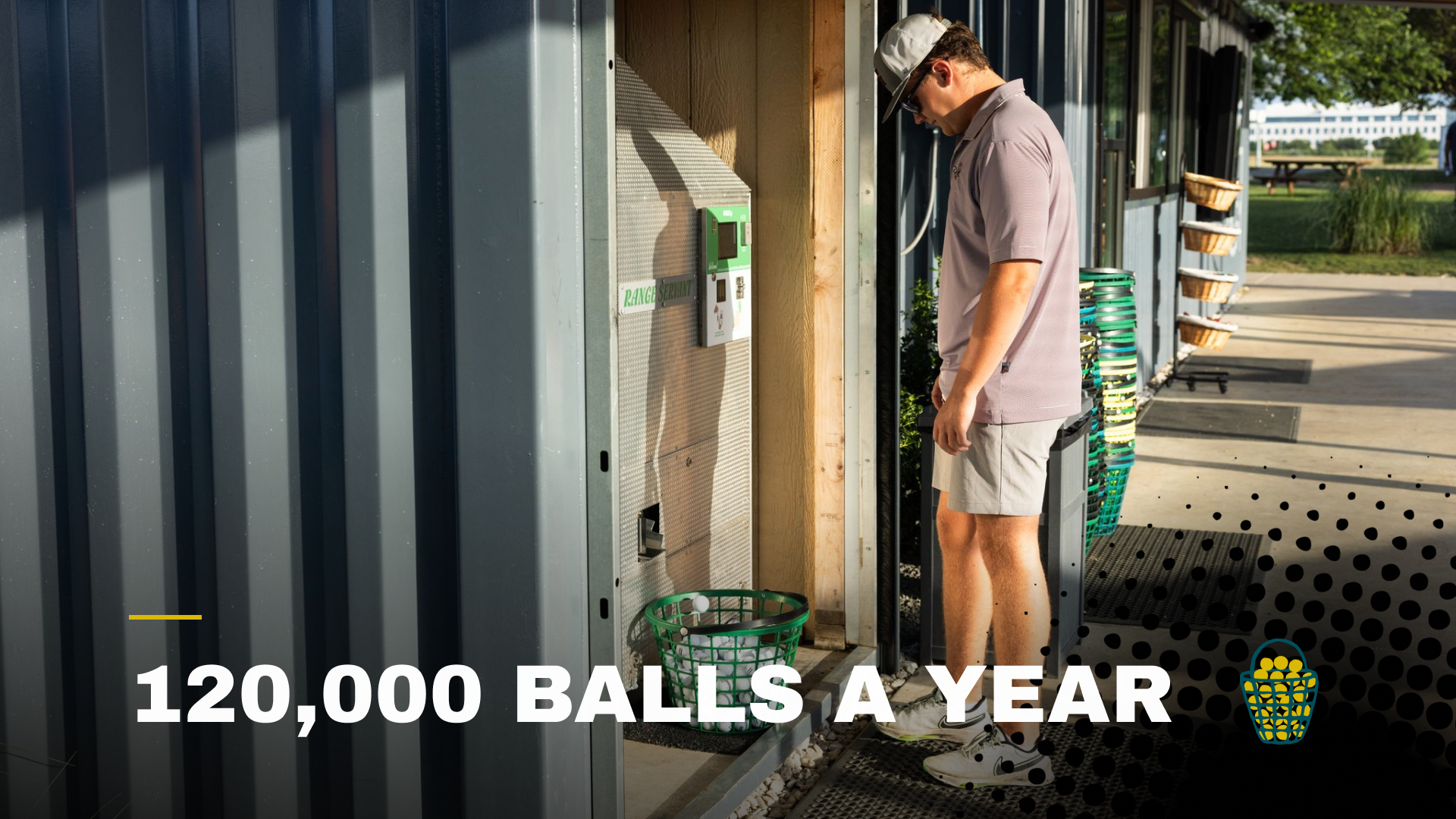
Dead range balls lose compression and dimple integrity, so they come off the face slower and fall out of the sky early. That skews carry, spin, and launch on any tracking system. Golf Ranch replaces 120,000+ balls a year so the numbers on your screen match what your swing actually did.
If you're reading Golf Ranch reviews to figure out whether a range is worth your time, here's the one spec nobody lists: the condition of the balls in the bucket. Your progress is only as good as the equipment you practice with, and we'd rather spend money on inventory than on adjectives.
The physics of a 'dead' range ball and Golf Ranch reviews

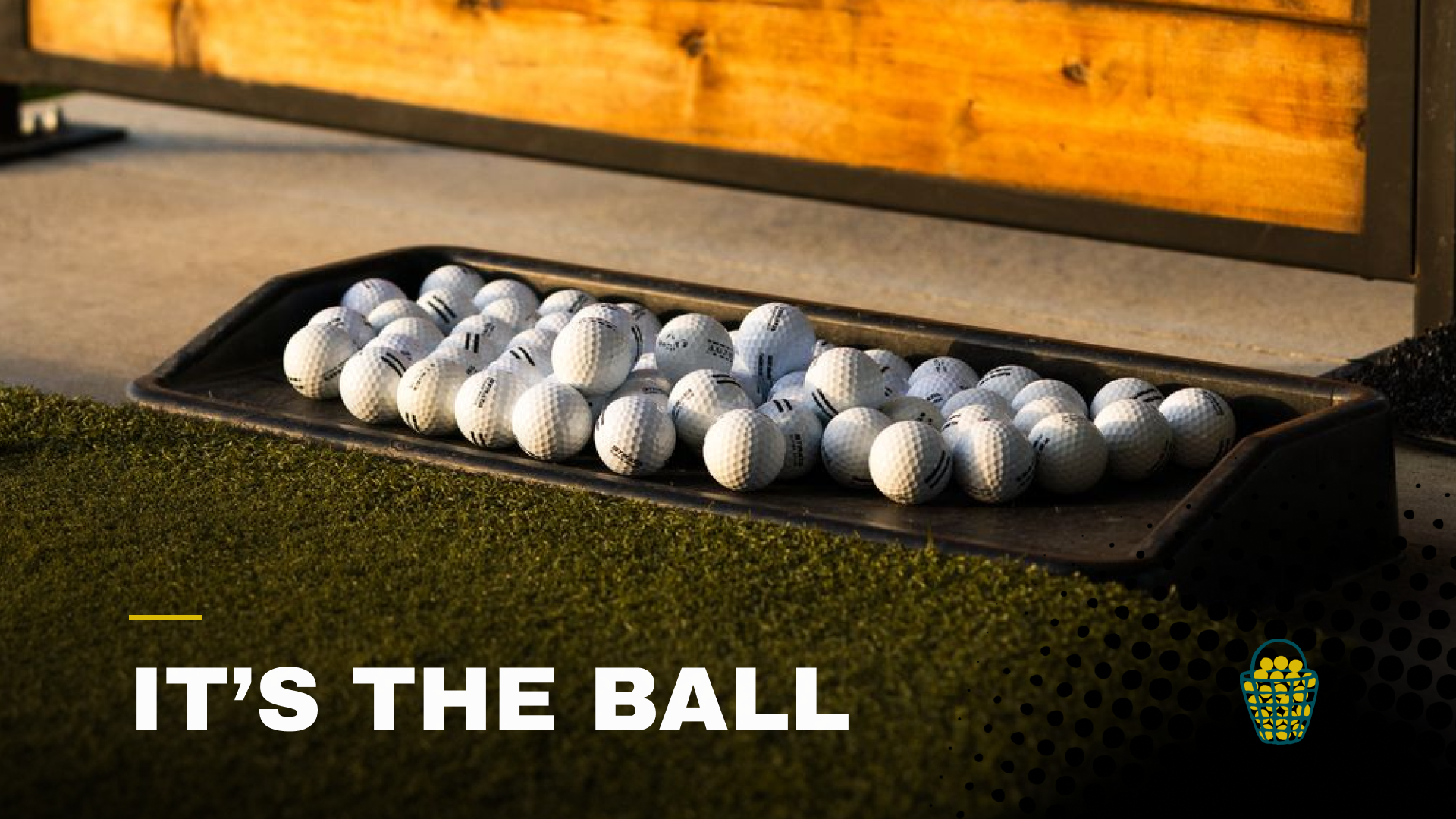
Worn-out balls are the biggest enemy of a session you're actually trying to learn something from. Hit a ball a few thousand times and it loses both its internal compression and its aerodynamic surface. What you get back is data that describes the ball, not your swing.
While swing analyzer apps give you real-time numbers, their output is only as reliable as the ball being tracked. Toptracer range accuracy depends on the condition of the dimples and the core, and no camera system can correct for a ball that's already dead.
Loss of compression
A dead ball doesn't spring off the face like a new one. Your ball speed reads low even when you flushed it. Then you swing harder to get the number back, and now you've traded your tempo for a problem the ball caused.
If you're working on consistency, that's the worst kind of false feedback. It punishes the good swing.
Surface wear and drag
Dimples create lift. Wear them down and the ball carries more drag and less lift, so it falls out of the sky early.
You can't gap your wedges against that. Whatever yardage you write down at the range won't hold up on the course.
Why consistent ball quality matters for your stats
Poor balls skew your launch monitor numbers in specific, predictable ways. Here's what a beaten-up bucket does to a session:
- Launch angle goes erratic. Worn covers interact unpredictably with your grooves.
- Spin rates drop off. A smoothed-out ball can't generate the spin a true flight path needs.
- Apex height jumps around. Shots balloon or dive with no obvious cause.
- Carry reads short. You lose distance that has nothing to do with how you struck it.
None of that shows up as an error message. It shows up as a swing change you didn't need to make.
The professional range difference
Here's our position: a range that doesn't rotate its inventory is selling you practice it can't deliver. The tracking screen is the easy part to buy. The balls are the part that costs money every single year, and they're the part most operators quietly let slide.
We replace 120,000+ golf balls a year across our six locations. That isn't a marketing number. It's the operating cost of making sure the carry figure on your screen is your carry figure.
The rest of the setup follows the same logic. Quality mats. Covered hitting bays so the weather doesn't change the conditions on you. Pay by the bucket instead of by the hour, so you can hit forty wedges in a row and call it practice with a plan rather than a session with a clock on it.
Five of our six locations run Toptracer, and Glendale runs Trackman. Either way, the tracking is only honest if the ball is. That's what a golf practice facility is supposed to get right before it gets anything else right.
Auditing your practice
- Look in the bucket before you hit. If a lot of them are scuffed smooth or split at the seam, the data is going to lie to you.
- Check your ball speed against your own known averages. A range-wide drop across every club is the ball, not you.
- Hit a bucket somewhere that maintains its inventory and watch the flight. You'll know inside ten swings.
FAQ
How often does Golf Ranch replace its range balls?
We cycle 120,000+ golf balls a year across our six locations, so the bucket you pick up comes out of maintained inventory rather than whatever survived the season.
Does range ball quality affect Toptracer numbers?
Yes, and the same goes for Trackman at Glendale. Both systems measure the ball that's actually in the air. If that ball has lost compression or dimple depth, your speed, spin, and carry readings all shift, and the system has no way to know it happened.
What is range ball compression and why does it matter?
Compression is how much the ball squashes against the face and springs back. A ball struck thousands of times loses that return, so it leaves the face slower even on a pure strike.
Can I trust range yardages for on-course club gapping?
Only if the balls are maintained. Gapping off worn inventory builds a chart that falls apart the first time you play it for real.
What to do next
You need a swing overhaul less often than you think. Sometimes you just need a ball that tells the truth.
Come hang out, hit a bucket, and see what your real ball flight looks like: grab your first bucket free. Find your closest location to get started, or book a lesson if you'd rather have someone read the numbers with you.
If you're out here every week, the bucket math on the Ranch Pass is worth a look.