.svg)



Mastering Toptracer: How to Use Real-Time Data to Lower Your Handicap
4 minutes to read
Ever hit a perfect 7-iron one day, only to wonder where that same shot went the next? That’s the frustrating part of golf. Sometimes, the issue has more to do with how you practice than how you swing.
Many recreational golfers spend their range sessions hitting ball after ball without a clear purpose, which can reinforce inconsistent habits. Toptracer, available at five of our six locations including Lee's Summit, with Trackman at Glendale, helps turn range time into focused practice that carries over to the course.
The Toptracer30: your data-driven baseline
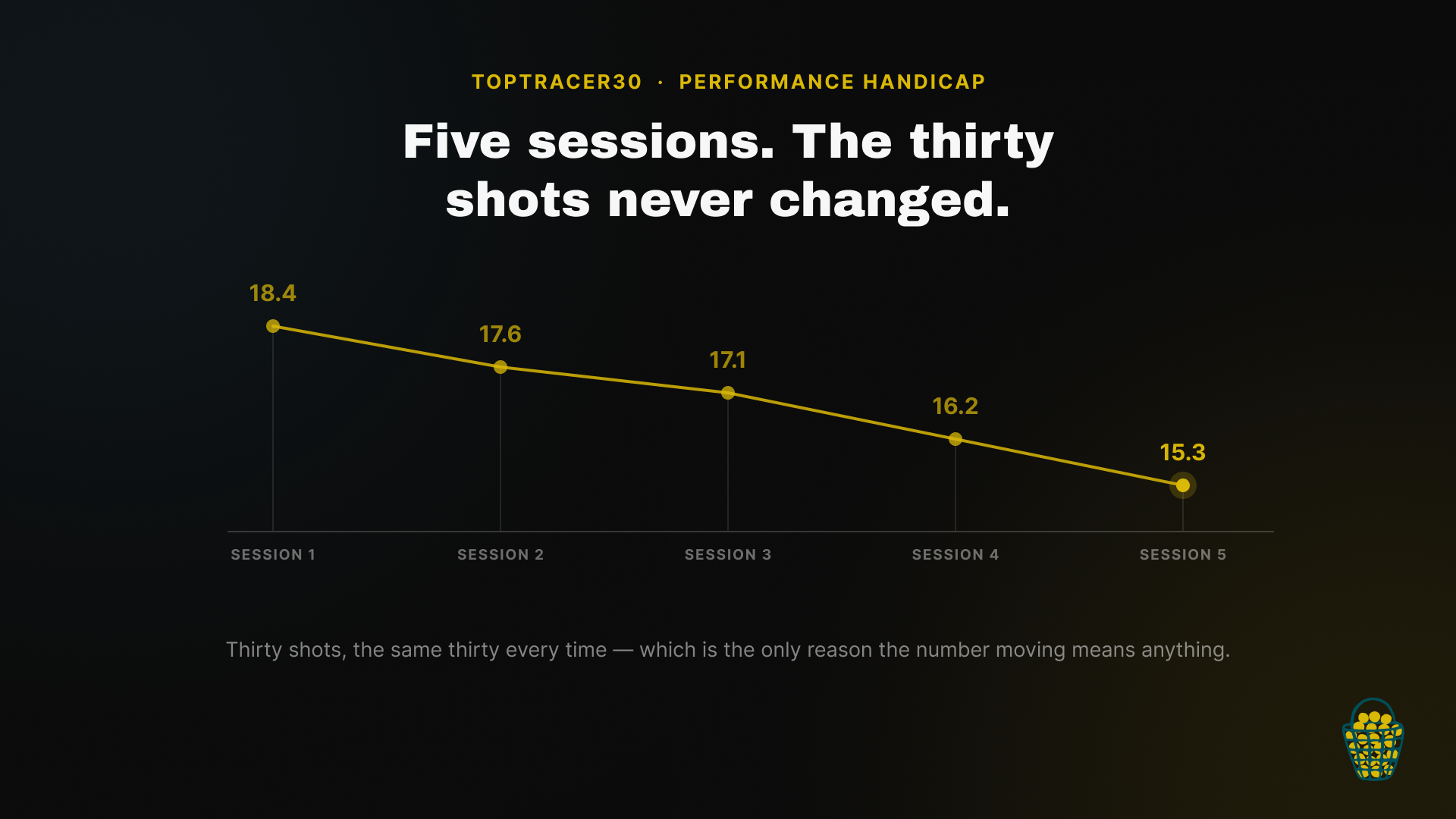
I find that most golfers have no idea what their actual skill level is until they face a scorecard. The Toptracer30 game mode changes this by evaluating your performance across 30 specific shots. It tests everything from your wedge game to your long irons. It provides an estimated performance handicap before you even step onto the first tee. Much like how biofeedback therapy uses physiological data to bridge the gap between cognitive and involuntary functions, these metrics help you connect your physical swing to objective results. Many players supplement this data with pga pro golf lessons to refine their technique further.
How the 30-shot assessment works
The system prompts you to hit specific shots, simulating the variety you face on a real course. It measures how close you get to the target and how consistently you hit your windows. By the end of the session, you receive a detailed breakdown. You will see which clubs are helping you and which ones are costing you strokes, allowing you to build a 30-day improvement plan based on your specific weaknesses.
Identifying your "range handicap"
Toptracer calls this a performance handicap: an estimate drawn from your practice, not an official handicap you can take to the course. By analyzing 30 distinct shots, the technology identifies your specific skill gaps. This number removes the ego from practice. It shows you exactly where your game stands today so you can focus on the areas that actually need improvement.
3 steps to mastering your shot data
I have observed that golfers who understand their numbers improve faster than those who just watch the ball flight. Here is how to interpret your driving range data to build a more consistent swing.
- Focus on carry distance over total distance. Total distance includes roll, which varies by turf, but carry distance is the honest measure of your power and strike quality.
- Monitor your apex height. If your 7-iron apex is inconsistent, your yardage gapping will be a nightmare. Consistent height leads to predictable landings.
- Track ball speed to check your strike. Sudden drops in ball speed usually signal a miss-hit, even if the ball looks straight. Gamifying your range sessions through these metrics is the first step to fixing swing inconsistencies.
Pro tip: Focus on your carry distance first. Most amateurs overestimate how far they hit the ball.
Bag mapping: knowing your real numbers
One of the biggest mistakes I see is the "ego yardage" trap. You remember the one time you hit a 150-yard 9-iron and suddenly that is your number. This is where visual tracing stops the guessing game by showing you the cold, hard reality of every flight path.
Carry distance vs. total distance
Knowing your carry distance is non-negotiable for low-handicap golf. If there is a bunker at 145 yards and your real carry is 142, you are in the sand every time. Interpreting your golf data allows you to see the difference between where the ball lands and where it stops.
Eliminating the "ego" yardage
Data doesn't care about your feelings. When you see ten shots with a 6-iron averaged out, you get a true yardage baseline. This eliminates the guesswork and helps you make better decisions on the course. You stop playing for the perfect shot and start playing for your actual average, which is why trend-based data is essential for actual skill improvement.
Simulating pressure: beyond the hitting bay
Practice should feel like play. If you aren't feeling a little bit of pressure at the range, you aren't preparing for the course. Technology offers several modes to keep you sharp.
- Virtual Golf: Play world-class courses and practice specific approach shots.
- Points Game: Compete against friends or your own high score to sharpen accuracy.
- Long Drive: Test your maximum ball speed and efficiency with the driver.
- Approach Challenge: Focus specifically on your iron play and proximity to the hole.
FAQ
Do I need the Toptracer app to see my data?
While the bay monitors show your data in real-time, the app allows you to save your sessions and track your handicap progress over time.
Is Toptracer30 only for low handicappers?
Not at all. It is actually most useful for beginners and mid-handicappers who need to identify which parts of their game are holding them back.
What to do next: your first data-backed bucket
- Visit the range and sign into the app at your bay.
- Start with the Toptracer30 mode to establish your baseline handicap.
- Identify your two weakest clubs and spend the rest of your bucket on targeted drills.
Moving from guessing to knowing is the fastest way to drop strokes. Professional-grade feedback isn't just for those taking lessons in golf anymore.
Ready to start your profile today? Grab a free bucket to get started.