.svg)



From First Free Bucket to Regular: A 30-Day Improvement Plan

4 minutes to read
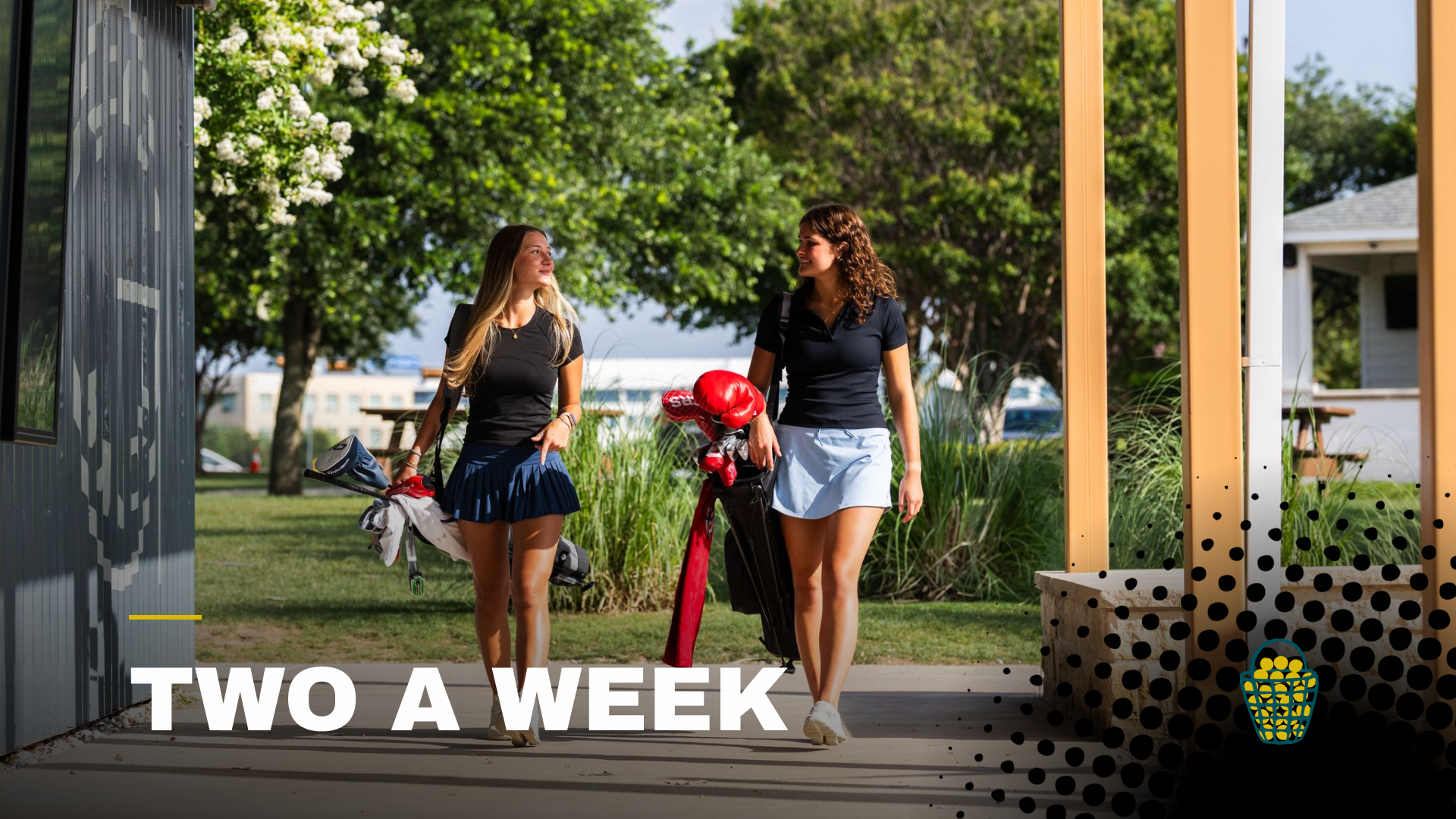
Ever feel like you are just turning money into noise at the range? It is time to stop hitting buckets and start building a game. Learning how to be a better golfer requires a structured approach. Most golfers hit a plateau after their first few visits because they lack a plan. They often show up, swing hard, and leave with the same flaws they arrived with. This 30-day plan turns Toptracer data into a personal coach, providing the consistency that beats intensity every time.
Phase 1: The baseline (days 1-7)
Recording your stock yardages
Before you can improve, you need to know exactly where you stand. Most amateurs overestimate their club distances by at least ten yards. During your first week, focus exclusively on hitting ten balls with every club in your bag. Toptracer tracks your carry and total distance, giving you a realistic average to trust on the course. This data eliminates the guesswork and helps you play to your actual strengths.
Identifying your natural shot shape
Stop trying to hit the perfect straight shot every time. Use the first week to observe which way the ball naturally curves. Whether it is a slight draw or a persistent fade, acknowledging your natural shape allows you to aim effectively. When you see your trends visualized on the screen, you stop fighting your swing and start managing your misses. This phase establishes performance baselines that serve as the foundation for every adjustment that follows.
Phase 2: Attacking the gaps (days 8-21)
Now that you have your data, it is time to sharpen your execution. The middle two weeks focus on shifting from distance to precision. High-quality practice requires specific objectives for every single bucket.
- Use the Toptracer Points Game to simulate high-pressure approach shots and track accuracy under tension.
- Focus on dispersion over distance by trying to keep five consecutive shots within a ten-yard radius of your target.
- Practice with your most used clubs to improve golf swing stats where they matter most for your score.
- Challenge yourself with different targets on every third shot to mimic the variability of a real round of golf.
Precision over power
A practice-oriented environment allows you to isolate technical gaps without the distractions of a loud social venue. The goal is to tighten your landing zones because smaller misses lead to better scores. Beyond the facility, regular visits allow you to see these technical changes stick. Seeing those improvements reflected in your session history builds the confidence needed for the final week.
Phase 3: The 30-day audit (days 22-30)
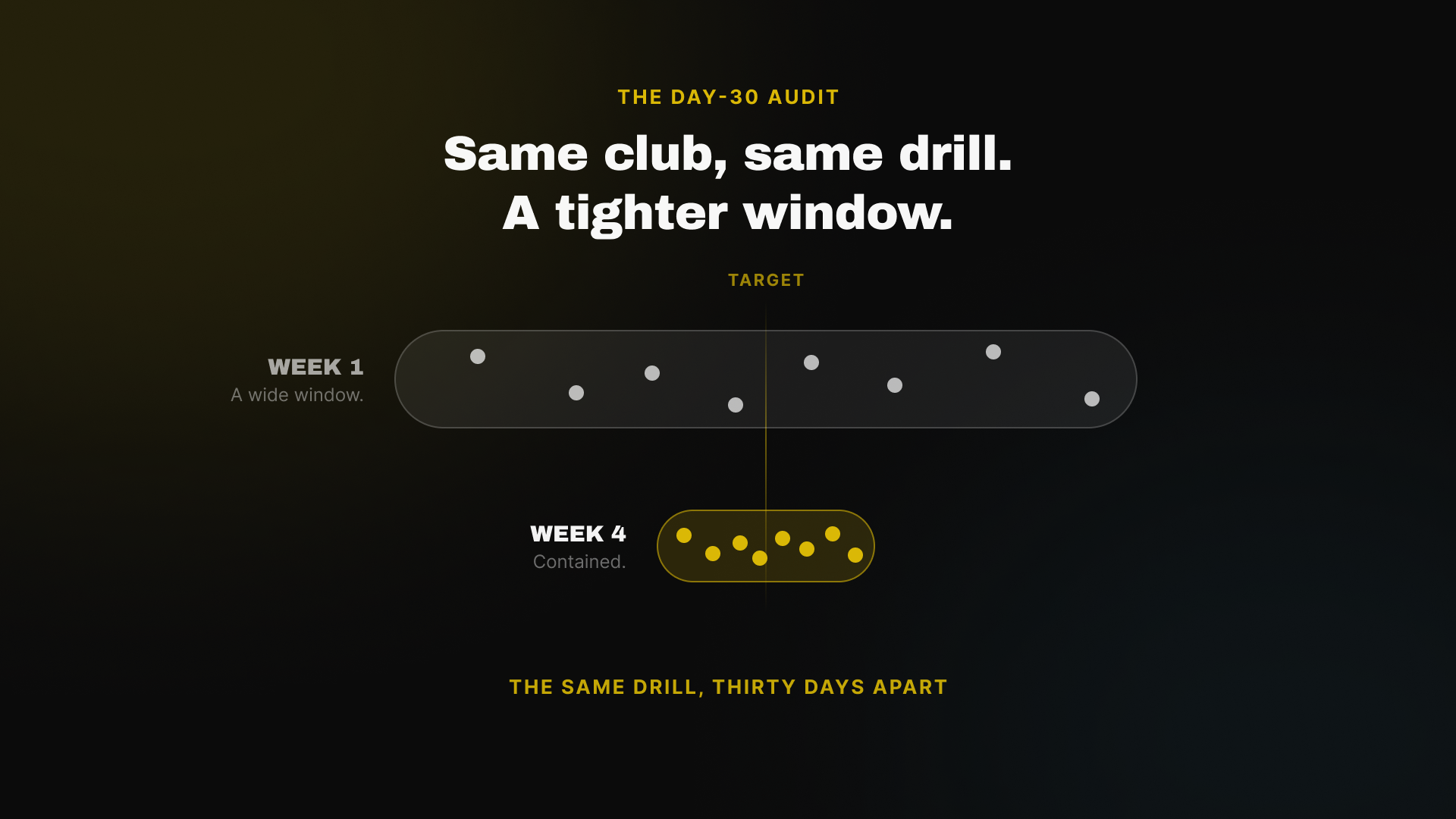
Comparing week 4 data to week 1
In the final stretch, return to the baseline drills from week one. Hit the same clubs and compare your new averages to your starting points. You will likely see that your dispersion has narrowed and your yardages have become more consistent. This comparison provides a psychological win. Seeing measurable progress on a screen proves that your effort is paying off. Much like a skin cycle requires a full month to show results, your swing needs this time to manifest change.
Setting the next milestone
Improvement is a continuous loop. Once you see what 30 days of intentional practice can do, you can set even more specific goals for the next month. Perhaps you want to lower your average proximity to the hole or increase your ball speed. Whatever the metric, you now have the habit of using data to drive your development. You are no longer just a casual hitter, you are a golfer with a plan.
Frequently asked questions
Do I need a pro to start this plan?
No. While coaching helps, Toptracer provides the immediate feedback you need to start identifying your own trends and yardages. If you hit a wall, professional lessons are available on-site to help refine your mechanics.
How many balls should I hit per session?
Quality beats quantity. A medium bucket of around 60 to 75 balls is usually enough to stay focused without getting physically fatigued.
What if I miss a few days?
Just pick up where you left off. The goal is 30 days of practice, not necessarily 30 consecutive calendar days.
Do I need a membership to practice?
No. We operate on a pay-per-bucket model. You can just show up and practice at your own pace without the pressure of an hourly clock or a golf range membership fees.
Summary: Your 30-day checklist
- Claim your first bucket and record your baseline distances for your five most used clubs.
- Schedule two sessions per week for the next month to ensure your practice remains consistent.
- Use the Toptracer app to track your progress and see how regular access and Golf Ranch member benefits make affordable golf practice a reality.
Quality facilities provide the tools, but the 30-day plan provides the path. Grab your bag and hit your first bucket today.